General contractor · South Carolina
South Carolina general contractor license requirements
What South Carolina requires before you take paid general contracting: the license, job size limit, exams, fees, bond and insurance. Checked November 6, 2026 from 8 official sources.
Do I need a license to work as a general contractor in South Carolina?
Yes. You need a state license: General Contractor license (Contractor's Licensing Board).
Issued by South Carolina Contractor's Licensing Board (LLR)1
- Needed from
- $10,000
- Bond
- None listed
- Initial license fee
- $350
- Exams
- 3
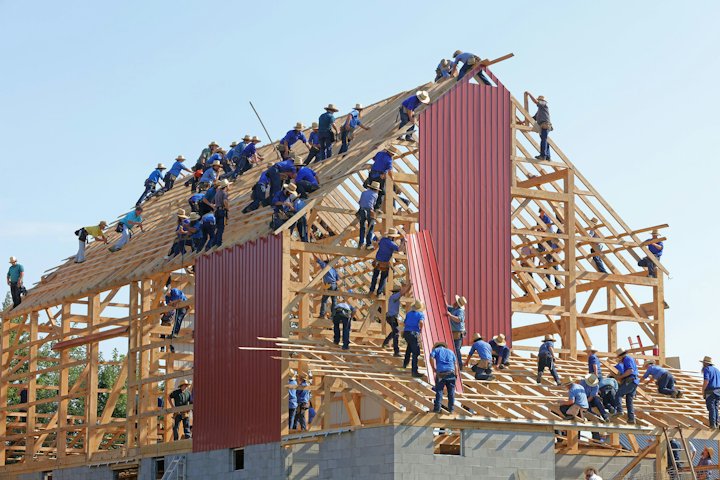
A Contractor's Licensing Board license is needed to perform or offer to perform general or mechanical contracting when the total cost of construction is more than $10,000.23
More
The total cost of the whole project sets the license group, and it is unlawful to split work into smaller parts to avoid the license rules.
How to get licensed
- 1
Pass the PSI technical exam for the classification (if one is required) and the SC Business Management and Law for Commercial Contractors exam.4
- 2
Apply for qualifying party certification (Doc. 168) with a work experience affidavit showing two years in the past five.4
- 3
- 4
Check with the city or county for local business licenses and permits.4
What South Carolina requires
Experience
The entity must name a primary qualifying party for each classification.24
More
That person must show at least two years of full-time work in the classification within the past five years and must be in a management role with the company. Exam-waiver and reciprocity applicants are not held to this experience rule on the Board's page.
Exams 3
- SC Business Management and Law for Commercial Contractors
- Technical exam for each classification
Most classifications need a PSI technical exam, including Limited Building, Unlimited Building, Concrete, Roofing, Nonstructural Renovation and Swimming Pools.245
More
Boring and Tunneling, Highway Incidental, Masonry, Miscellaneous Metals and Railroad Lines have no technical exam. A person may take an exam in a classification only two times in 12 months, then once every six months.
- Building exams by group
Bond None
No separate license bond is required. Instead of a financial statement, a general contractor may file a continuous surety bond equal to its group's net worth requirement: Group 1 $20,000, Group 2 $60,000, Group 3 $150,000, Group 4 $250,000, Group 5 $350,000.247
More
The bond lists the State of South Carolina as obligee and protects people harmed by the contractor's breach of a construction contract. Bonds payable to the Residential Builders Commission are not accepted by this Board.
Liability insurance
Not published by the agency. Customers and general contractors often ask for proof anyway.
Workers' compensation
Not published by the agency for this license.
Renewal
General contractor licenses expire October 31 of every even-numbered year and mechanical contractor licenses expire October 31 of every odd-numbered year.247
More
A financial statement or bond must be accepted before the online renewal opens. Late renewal is allowed through January 31 with a late fee; after that the license lapses and must be reinstated.
Fees
Good to know
The General Contractors classifications are Building, Highway, Public Utility and Specialty.2
More
Specialty subclassifications include Concrete, Nonstructural Renovation, Masonry, Roofing, Swimming Pools, Glass and Glazing, Marine, Structural Framing and Miscellaneous Metals.
General contractor license groups set the most a contractor may bid or take on per job.24
More
Group 1: up to $100,000 per job, with $20,000 net worth or $10,000 working capital. Group 2: up to $400,000, with $60,000 net worth or $40,000 working capital. Group 3: up to $1,000,000, with $150,000 net worth or $100,000 working capital. Group 4: up to $3,000,000, with $250,000 net worth or $175,000 working capital. Group 5: unlimited, with $350,000 net worth or $250,000 working capital.
For a first license, Groups 1 and 2 may use an owner-prepared financial statement on the Board's form (Doc.247
More
172). Groups 3 and 4 need a statement compiled by a licensed CPA under GAAP, and Group 5 needs a CPA-audited balance sheet. At renewal, Groups 1 to 4 may use the owner-prepared form and Group 5 needs a CPA-reviewed statement. The balance sheet date must be no more than 12 months before the application. A surety bond may be filed instead.
A building licensee may do ancillary concrete, paving, glazing, grading and similar work tied to its own building, up to 20 percent of the total cost of construction.2
A licensee may use unlicensed subcontractors within its own group and classification if it supervises them, and is responsible for their violations.2
An unlicensed contractor cannot sue to enforce the contract. Contractors must do business under the exact name on the license.2
An owner improving their own residence for their own use, with their own employees or licensed contractors, is exempt.2
More
A sale or rental within two years of completion is treated as evidence the work was not for the owner's own use.
General contractor rules in South Carolina cities
Some places make general contractors get a local license on top of South Carolina's. Find yours below.
- AndersonLocal license required
- BeaufortLocal license required
- BlufftonLocal license required
- CamdenLocal license required
- CharlestonNo local license for this trade
- ColumbiaNo local license for this trade
- ConwayLocal license required
- EasleyLocal license required
- FlorenceLocal license required
- Forest AcresLocal license required
- Fort MillLocal license required
- Goose CreekLocal license required
- GreenvilleLocal license required
- GreenwoodLocal license required
- HanahanLocal license required
- Hilton Head IslandLocal license required
- Isle of PalmsLocal license required
- LexingtonLocal license required
- MauldinLocal license required
- Moncks CornerLocal license required
- Mount PleasantLocal license required
- NewberryLocal license required
- North CharlestonLocal license required
- North Myrtle BeachLocal license required
- OrangeburgLocal license required
- Port RoyalLocal license required
- SenecaLocal license required
- SimpsonvilleLocal license required
- SpartanburgLocal license required
- SummervilleLocal license required
- SumterLocal license required
- Surfside BeachLocal license required
- Tega CayLocal license required
- Travelers RestLocal license required
- West ColumbiaLocal license required
No match. Your city may not be on the site yet. Check with its building department.
Hiring a general contractor in South Carolina?
What to ask for
A current General Contractor license (Contractor's Licensing Board) number, then look it up yourself.
Common questions
Do I need a license to work as a general contractor in South Carolina?
Yes. South Carolina requires General Contractor license (Contractor's Licensing Board). A Contractor's Licensing Board license is needed to perform or offer to perform general or mechanical contracting when the total cost of construction is more than $10,000. The total cost of the whole project sets the license group, and it is unlawful to split work into smaller parts to avoid the license rules.
How much does General Contractor license (Contractor's Licensing Board) cost in South Carolina?
Initial license fee (general or mechanical): $350. Biennial renewal fee: $135. Late fee, renewal in November: $100. Late fee, renewal in December: $150. Late fee, renewal in January: $200. Reinstatement fee: $350.
Is a bond required?
No separate license bond is required. Instead of a financial statement, a general contractor may file a continuous surety bond equal to its group's net worth requirement: Group 1 $20,000, Group 2 $60,000, Group 3 $150,000, Group 4 $250,000, Group 5 $350,000. The bond lists the State of South Carolina as obligee and protects people harmed by the contractor's breach of a construction contract. Bonds payable to the Residential Builders Commission are not accepted by this Board.
What exams do I need to pass?
SC Business Management and Law for Commercial Contractors. Technical exam for each classification. Building exams by group.
How often do I renew?
General contractor licenses expire October 31 of every even-numbered year and mechanical contractor licenses expire October 31 of every odd-numbered year. A financial statement or bond must be accepted before the online renewal opens. Late renewal is allowed through January 31 with a late fee; after that the license lapses and must be reinstated.
Sources
8 official pages, checked November 6, 2026
- South Carolina Contractor's Licensing Board · SC Department of Labor, Licensing and Regulation, Contractor's Licensing Board · checked November 6, 2026
- SC Code of Laws, Title 40, Chapter 11 - Contractors · South Carolina Legislature · checked November 6, 2026
- General Information · SC Department of Labor, Licensing and Regulation, Contractor's Licensing Board · checked November 6, 2026
- Licensure with the Board · SC Department of Labor, Licensing and Regulation, Contractor's Licensing Board · checked November 6, 2026
- SC Code of Regulations, Chapter 29 - State Licensing Board for Contractors · South Carolina Legislature · checked November 6, 2026
- Fees · SC Department of Labor, Licensing and Regulation, Contractor's Licensing Board · checked November 6, 2026
- Renew My License · SC Department of Labor, Licensing and Regulation, Contractor's Licensing Board · checked November 6, 2026
- SC Code of Laws, Title 40, Chapter 59 - Residential Builders · South Carolina Legislature · checked November 6, 2026
Rules change. Confirm with the agency before you bid or start work. How we research
Other trades in South Carolina
 Residential builder
Residential Builder license
 Electrician
Residential Electrician license (Residential Builders Commission); Mechanical Contractor license, Electrical classification (Contractor's Licensing Board)
 Plumber
Residential Plumber license (Residential Builders Commission); Mechanical Contractor license, Plumbing classification (Contractor's Licensing Board)
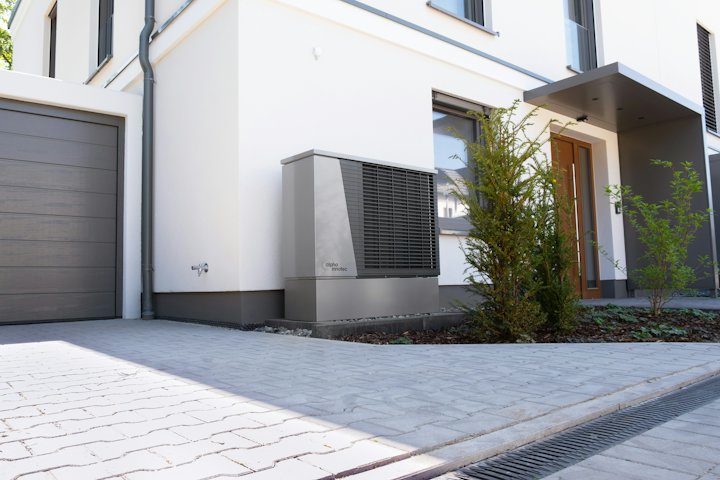 HVAC contractor
Residential HVAC Installer and Repairer license (Residential Builders Commission); Mechanical Contractor license, Air Conditioning, Heating or Packaged Equipment classification (Contractor's Licensing Board)
 Roofer
Residential Specialty Contractor registration, Roofers classification (Residential Builders Commission); General Contractor license, Roofing subclassification (Contractor's Licensing Board)
 Painter
Residential Specialty Contractor registration, Painters/Wallpaperers classification (Residential Builders Commission); General Contractor license, Nonstructural Renovation subclassification (Contractor's Licensing Board)
 Handyman
Covered by the state contractor license above a threshold
 Landscaper
No state license for this work
 Flooring contractor
Residential Specialty Contractor registration, Floor Covering Installers classification (Residential Builders Commission); General Contractor license, Nonstructural Renovation subclassification (Contractor's Licensing Board)
 Concrete contractor
Residential Specialty Contractor registration, Masons classification (Residential Builders Commission); General Contractor license, Concrete subclassification (Contractor's Licensing Board)
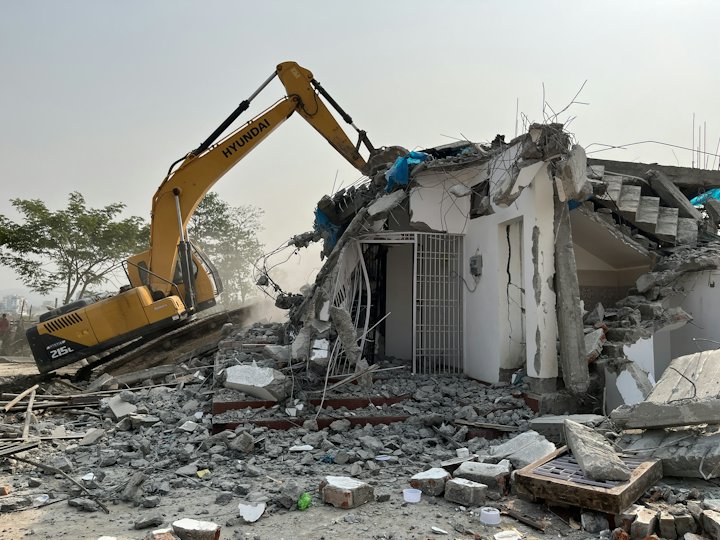 Demolition contractor
No state license for this work
 Pool and spa contractor
General Contractor license, Swimming Pools subclassification (Contractor's Licensing Board)
 Solar installer
Residential Specialty Contractor registration, Solar Panel Installers classification (Residential Builders Commission); General Contractor license, Miscellaneous Metals subclassification (Contractor's Licensing Board)
 Fence contractor
No state license for this work
 Pest control
Commercial Pesticide Applicator license, Category 7A, and Pest Control Business License
 Home inspector
Home Inspector license
General contractor licenses in other states
 Alabama
General Contractor license (prime contractor or subcontractor), with major and specialty classifications
 Alaska
Certificate of registration as a general contractor
 Arizona
B-1 General Commercial Contractor, KB-1 Dual Building Contractor, or B General Residential Contractor
 Arkansas
Commercial contractor license (restricted or unrestricted), Arkansas Contractors Licensing Board
 California
B General Building Contractor
 Connecticut
Home Improvement Contractor Registration (residential work); Major Contractor Registration (buildings over the threshold limits)
 Delaware
Contractor Business License (resident or non-resident), Division of Revenue
 District of Columbia
Basic Business License with General Contractor/Construction Manager endorsement (Class A, B, C, G or H)
 Florida
Certified General Contractor (CG) or Registered General Contractor (RG)
 Georgia
Commercial General Contractor license
 Hawaii
B General Building Contractor
 Idaho
Idaho contractor registration
 Illinois
No state license for this work
 Indiana
No state license. Cities or counties may license it
 Iowa
Construction contractor registration
 Kansas
No state license. Cities or counties may license it
 Kentucky
No state license. Cities or counties may license it
 Louisiana
Commercial license, Building Construction classification
 Maryland
Home Improvement Contractor License (Maryland Home Improvement Commission)
 Massachusetts
Construction Supervisor License (Unrestricted)
 Michigan
No state license for this work
 Minnesota
Construction contractor registration
 Mississippi
Commercial certificate of responsibility, Building Construction major classification
 Missouri
No state license. Cities or counties may license it
 Montana
 Construction Contractor License
 Nebraska
Contractor registration (Nebraska Department of Labor)
 Nevada
B General Building Contractor
 New Jersey
Home Improvement Contractor Business Registration
 New Mexico
GB-98 General Building
 New York
No state license. Cities or counties may license it
 North Carolina
General Contractor license, Building classification (limited, intermediate or unlimited)
 North Dakota
Contractor License (Class A, B, C or D)
 Ohio
No state license. Cities or counties may license it
 Oklahoma
No state license. Cities or counties may license it
 Oregon
CCB contractor license with a general contractor endorsement (Residential General, or Commercial General Level 1 or Level 2)
 Pennsylvania
Home Improvement Contractor Registration (HICPA)
 Rhode Island
Contractor Registration
 South Dakota
Contractor's Excise Tax License (Department of Revenue)
 Tennessee
Contractor license (BC Building Construction, BC-B Commercial, BC-C Industrial, or other classification)
 Texas
No state license for this work
 Utah
B100 General Building Contractor
 Vermont
Residential Contractor Registration (individual or business)
 Virginia
Class A, B or C contractor license with the Commercial Building (CBC) or Residential Building (RBC) classification
 Washington
General contractor registration
 West Virginia
General Building Contractor
 Wisconsin
Dwelling Contractor certification with a Dwelling Contractor Qualifier (one- and two-family dwellings)