General contractor · Connecticut
Connecticut general contractor license requirements
What Connecticut requires before you take paid general contracting: the license, job size limit, exams, fees, bond and insurance. Checked November 6, 2026 from 11 official sources.
Do I need a license to work as a general contractor in Connecticut?
Yes. You need a state registration: Home Improvement Contractor Registration (residential work); Major Contractor Registration (buildings over the threshold limits).
Issued by Connecticut Department of Consumer Protection (DCP)12
- Needed from
- $200
- Bond
- None listed
- Home improvement contractor registration, total charged at application
- $220
- Exams
- None listed

A home improvement contractor must register with DCP before contracting with an owner to work on a private residence or residential rental property (a single-family home, a building of up to six units, or a condominium unit).34
More
Under the law, work is home improvement only when the total price is more than $200, and a person whose home improvement contracts total $1,000 or less over any 12 months is not a contractor. DCP says the registration does not cover work done by owners on their own property, subcontracted work, work covered by a trade license, work on commercial property, property maintenance such as snowplowing, mowing, pruning or cleaning, tree and shrub cutting or stump grinding, or building new homes.
How to get licensed
- 1
Decide whether to register as an individual or as a business entity.5
More
An LLC or corporation must first register with the Connecticut Secretary of the State, and an individual registration does not cover an LLC.
- 2
Get general liability insurance of at least $20,000.5
- 3
Apply online through eLicense and pay the $220 non-refundable fee.5
More
Applicants with a felony conviction also complete the Criminal Conviction Application Worksheet.
- 4
- 5
Renew online every year by March 31.6
What Connecticut requires
Experience
Not published by the agency.
Exams
No exam listed by the agency.
Workers' compensation
Not published by the agency for this license.
Renewal
Registrations expire every year on March 31. The renewal fee is $220 and renewals must be filed and paid online.36
More
DCP sends renewal notices about 30 days before expiration, but not getting a notice does not excuse a late renewal. Contact, insurance and criminal history information must be updated online within 30 days of a change.
Fees
Good to know
Work on large buildings that exceed the state threshold limits (for example 4 stories, 60 feet high, a 150-foot clear span, 150,000 square feet, or occupancy of 1,000 people) needs a DCP Major Contractor Registration.910
More
DCP says this includes roofing, masonry and structural framework on such buildings, but not residential work, new homes or work that does not affect structural integrity, such as painting.
A Major Contractor Registration needs two credit references, one from the trade industry (a supplier or subcontractor) and one from a financial institution.9
More
Registrations expire every year on June 30 and the renewal fee is $500. A registration can be reinstated within three years of expiration; after that the business must reapply.
A person prequalified as a contractor or substantial subcontractor by the Department of Administrative Services is issued a major contractor registration with no fee.10
More
Individuals licensed under the trade licensing chapter (chapter 393) are exempt while doing work they are licensed for.
A home improvement contract is not enforceable against the owner unless it is in writing, signed by both sides, contains the entire agreement, the date, the contractor's name, address and registration number, a notice of the owner's cancellation rights, and start and completion dates.3
The Home Improvement Guaranty Fund can pay an owner who wins a judgment, arbitration award or restitution order against a registered contractor and cannot collect. No single claim can be paid more than $25,000.3
Doing home improvement work without a current registration is a class B misdemeanor, and DCP may also impose a civil penalty of up to $1,500 per violation.3
General contractor rules in Connecticut cities
Some places make general contractors get a local license on top of Connecticut's. Find yours below.
No match. Your city may not be on the site yet. Check with its building department.
Hiring a general contractor in Connecticut?
What to ask for
A current Home Improvement Contractor Registration (residential work); Major Contractor Registration (buildings over the threshold limits) number, then look it up yourself.
Common questions
Do I need a license to work as a general contractor in Connecticut?
Yes. Connecticut requires Home Improvement Contractor Registration (residential work); Major Contractor Registration (buildings over the threshold limits). A home improvement contractor must register with DCP before contracting with an owner to work on a private residence or residential rental property (a single-family home, a building of up to six units, or a condominium unit). Under the law, work is home improvement only when the total price is more than $200, and a person whose home improvement contracts total $1,000 or less over any 12 months is not a contractor. DCP says the registration does not cover work done by owners on their own property, subcontracted work, work covered by a trade license, work on commercial property, property maintenance such as snowplowing, mowing, pruning or cleaning, tree and shrub cutting or stump grinding, or building new homes.
How much does Home Improvement Contractor Registration (residential work); Major Contractor Registration (buildings over the threshold limits) cost in Connecticut?
Home improvement contractor registration, total charged at application (non-refundable): $220. Registration fee portion set by law: $120. Home Improvement Guaranty Fund fee (paid each year with the application or renewal): $100. Annual renewal: $220.
Is a bond required?
DCP's application and renewal pages do not list a bond. Under CGS 20-422 the commissioner may require a bond as a condition of issuing, renewing or reinstating a registration, for the reasons listed in CGS 20-426.
How often do I renew?
Registrations expire every year on March 31. The renewal fee is $220 and renewals must be filed and paid online. DCP sends renewal notices about 30 days before expiration, but not getting a notice does not excuse a late renewal. Contact, insurance and criminal history information must be updated online within 30 days of a change.
Sources
11 official pages, checked November 6, 2026
- Verify a License · Connecticut Department of Consumer Protection · checked November 6, 2026
- eLicense Online · State of Connecticut eLicense · checked November 6, 2026
- Chapter 400 - Home Improvement Contractors · Connecticut General Assembly · checked November 6, 2026
- Home Improvement Contractor · Connecticut Department of Consumer Protection · checked November 6, 2026
- Home Improvement Contractor Application · Connecticut Department of Consumer Protection · checked November 6, 2026
- Home Improvement Renewal · Connecticut Department of Consumer Protection · checked November 6, 2026
- Chapter 400 - Home Improvement Contractors (2026 Supplement) · Connecticut General Assembly · checked November 6, 2026
- New Home Construction Contractor Applications · Connecticut Department of Consumer Protection · checked November 6, 2026
- Major Contractor Registration Application · Connecticut Department of Consumer Protection · checked November 6, 2026
- Chapter 393c - Major Contractors (2026 Supplement) · Connecticut General Assembly · checked November 6, 2026
- Home Improvement Salesperson · Connecticut Department of Consumer Protection · checked November 6, 2026
Rules change. Confirm with the agency before you bid or start work. How we research
Other trades in Connecticut
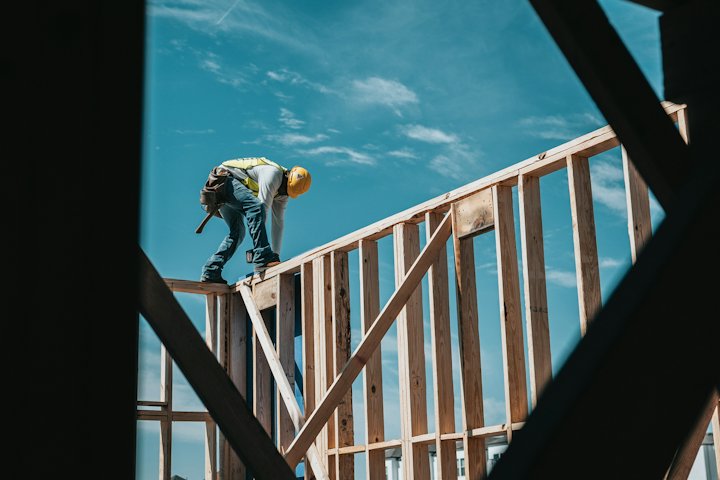 Residential builder
New Home Construction Contractor Registration
 Electrician
E-1 Unlimited Electrical Contractor (E-2 Unlimited Electrical Journeyperson)
 Plumber
P-1 Unlimited Plumbing Contractor (P-2 Unlimited Journeyperson Plumber)
 HVAC contractor
S-1 Unlimited Heating, Piping and Cooling Contractor (S-2 Journeyperson); limited types such as D-1/D-2 Warm Air, Air Conditioning and Refrigeration
 Roofer
Home Improvement Contractor Registration
 Painter
Home Improvement Contractor Registration
 Handyman
Home Improvement Contractor Registration
 Landscaper
Home Improvement Contractor Registration
 Flooring contractor
Home Improvement Contractor Registration
 Concrete contractor
Home Improvement Contractor Registration
 Demolition contractor
Demolition License (Class A or Class B)
 Pool and spa contractor
Swimming Pool Builder (SPB); SP-1 Limited Spa and Pool Contractor for maintenance and repair
 Solar installer
PV-1 Limited Solar Electric Contractor (PV-2 Journeyperson); ST-1 Solar Thermal Contractor
 Fence contractor
Home Improvement Contractor Registration
 Tree service
Arborist License (commercial pesticide supervisor category 3D) and Arborist Business Registration
 Pest control
Commercial Pesticide Supervisory Certification (such as 7A General Pest Control) and Pesticide Application Business Registration
 Home inspector
Home Inspector License (H-1)
 Junk removal and hauling
No state license. Cities or counties may license it
General contractor licenses in other states
 Alabama
General Contractor license (prime contractor or subcontractor), with major and specialty classifications
 Alaska
Certificate of registration as a general contractor
 Arizona
B-1 General Commercial Contractor, KB-1 Dual Building Contractor, or B General Residential Contractor
 Arkansas
Commercial contractor license (restricted or unrestricted), Arkansas Contractors Licensing Board
 California
B General Building Contractor
 Delaware
Contractor Business License (resident or non-resident), Division of Revenue
 District of Columbia
Basic Business License with General Contractor/Construction Manager endorsement (Class A, B, C, G or H)
 Florida
Certified General Contractor (CG) or Registered General Contractor (RG)
 Georgia
Commercial General Contractor license
 Hawaii
B General Building Contractor
 Idaho
Idaho contractor registration
 Illinois
No state license for this work
 Indiana
No state license. Cities or counties may license it
 Iowa
Construction contractor registration
 Kansas
No state license. Cities or counties may license it
 Kentucky
No state license. Cities or counties may license it
 Louisiana
Commercial license, Building Construction classification
 Maryland
Home Improvement Contractor License (Maryland Home Improvement Commission)
 Massachusetts
Construction Supervisor License (Unrestricted)
 Michigan
No state license for this work
 Minnesota
Construction contractor registration
 Mississippi
Commercial certificate of responsibility, Building Construction major classification
 Missouri
No state license. Cities or counties may license it
 Montana
 Construction Contractor License
 Nebraska
Contractor registration (Nebraska Department of Labor)
 Nevada
B General Building Contractor
 New Jersey
Home Improvement Contractor Business Registration
 New Mexico
GB-98 General Building
 New York
No state license. Cities or counties may license it
 North Carolina
General Contractor license, Building classification (limited, intermediate or unlimited)
 North Dakota
Contractor License (Class A, B, C or D)
 Ohio
No state license. Cities or counties may license it
 Oklahoma
No state license. Cities or counties may license it
 Oregon
CCB contractor license with a general contractor endorsement (Residential General, or Commercial General Level 1 or Level 2)
 Pennsylvania
Home Improvement Contractor Registration (HICPA)
 Rhode Island
Contractor Registration
 South Carolina
General Contractor license (Contractor's Licensing Board)
 South Dakota
Contractor's Excise Tax License (Department of Revenue)
 Tennessee
Contractor license (BC Building Construction, BC-B Commercial, BC-C Industrial, or other classification)
 Texas
No state license for this work
 Utah
B100 General Building Contractor
 Vermont
Residential Contractor Registration (individual or business)
 Virginia
Class A, B or C contractor license with the Commercial Building (CBC) or Residential Building (RBC) classification
 Washington
General contractor registration
 West Virginia
General Building Contractor
 Wisconsin
Dwelling Contractor certification with a Dwelling Contractor Qualifier (one- and two-family dwellings)