General contractor · Nevada
Nevada general contractor license requirements
What Nevada requires before you take paid general contracting: the license, job size limit, exams, fees, bond and insurance. Checked November 6, 2026 from 27 official sources.
Do I need a license to work as a general contractor in Nevada?
Yes. You need a state license: B General Building Contractor.
Issued by Nevada State Contractors Board (NSCB)12
- Needed from
- $1,000
- Bond
- Required
- Fee to consider an application for a license in a classification the applicant is not licensed in
- $300
- Exams
- 1
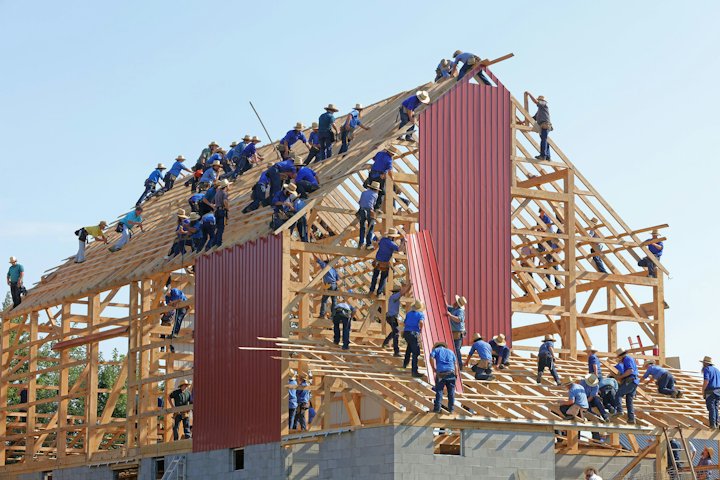
A contractor's license is needed to construct, alter, repair, improve, move or demolish a building or other structure or improvement, and bidding on such a job without a license is unlawful.345
More
Repair or maintenance work worth less than $1,000 in labor and materials is exempt only if all of these are true: no building permit is needed; the work is not the kind done by plumbing, electrical, refrigeration, heating or air-conditioning contractors; it is not in a Board classification that significantly affects public health, safety and welfare; it is not part of a larger project worth $500 or more (or a larger project split into contracts under $500 to avoid the law); and it is not done by a licensee or a licensee's employee.
How to get licensed
- 1
Pick the classification or subclassification for the work (for example B, or A for engineering work). A separate application is needed for each classification.7
- 2
- 3
If the Board requires an exam, pass it through the independent testing service within 6 months after filing, unless it is waived.9
- 4
- 5
- 6
Check the license on the NSCB Contractor License Search once it is issued.1
What Nevada requires
Experience
The applicant (or the person qualifying for the business) must have at least 4 years of experience within the 15 years before applying, as a journeyman, foreman, supervising employee or contractor in the specific classification applied for.67
More
Training at an accredited college or university, or an equivalent program the Board accepts, can count for up to 3 of the 4 years. The 15-year window does not apply to someone who already qualified for a license in the same classification. The application must include four or more Board certificates of work experience, or a current master certification from a government agency in a similar discipline, or proof of transferable military experience and training, or proof of an approved training program.
Exams 1
- Board examination
When the Board requires an exam, the applicant or qualified employee must pass it through an independent testing service.89
More
The regulation does not name the testing company. The exam can be taken up to three times and must be passed within 6 months after the application is filed; after a third failure the application is void and a new application can be filed 30 days or more after the last exam. The Board waives the exam for someone who passed an approved exam in a state the Board treats as substantially equivalent, and it may waive the exam when experience and qualifications justify it.
Bond
Before a license is issued, the applicant must file a surety bond or make a cash deposit with the Board.13
More
The Board sets the amount for each contractor based on the contractor's financial and professional responsibility and the size of its operations, between $1,000 and $500,000. The surety must have long-term debt rated A or better. The Board can raise or lower the amount at renewal or at a hearing, and after 5 consecutive years of licensed work in Nevada it may release a contractor from the bond. A contractor with three substantiated wage claims in 2 years must file a bond in an amount the Board sets.
Liability insurance
Not published by the agency. Customers and general contractors often ask for proof anyway.
Workers' compensation
Before a license is issued or renewed, the applicant must give the Board proof of industrial insurance (workers' compensation) and occupational disease coverage for its employees, a certificate of self-insurance, or an affidavit saying the applicant has no employees, is not and will not be a subcontractor for a principal contractor, and has not and will not bid on a job for a principal contractor or subcontractor.14
More
Failing to keep the coverage is cause for discipline, and the Board must suspend a license after 30 days' notice if the state reports the contractor is out of compliance.
Renewal
A license expires 2 years after it is issued unless the Board sets a staggered period.1115
More
The renewal application is due by the last day of the month the license expires (by the first day of that month if the Board asked for a financial statement). A license not renewed on time is automatically suspended. It can be reinstated within 6 months by filing for renewal and paying the renewal fee plus a reinstatement fee; after that the Board may cancel it, and a new original application is needed. Residential contractors also pay the Recovery Fund assessment at renewal.
Fees
Good to know
Nevada has three branches: A General Engineering (fixed works such as highways, sewers, pipelines and foundations), B General Building, and C specialty contracting.21920
More
A and B are separate branches; an AB license covers both and is limited to applicants who can support an unlimited license in both.
A B contractor's main business is building or remodeling structures that need more than two unrelated building trades, where the B contractor is the prime contractor.2
More
A B contractor may not do plumbing, electrical, refrigeration and air-conditioning or fire protection work without the specialty license.
B subclassifications are B-1 Premanufactured Housing, B-2 Residential and Small Commercial, B-3 Speculative Building, B-4 Service Stations, B-5 Prefabricated Steel Structures, B-6 Commercial Remodeling and B-7 Residential Remodeling.21
Every license carries a monetary limit set by the Board: the largest contract the contractor may take on one or more contracts on a single construction site or subdivision for a single client.222324
More
A contractor can ask for a permanent increase, or an increase for one project at least 5 working days before bidding. A bid or contract that goes over the limit or outside the license's scope is void, and each bid and contract must show the license number and the monetary limit.
Applicants must show financial responsibility. The required financial statement depends on the monetary limit requested: $25,000 or less can be a CPA statement, a Board form with an affidavit, or accounting-software statements with an affidavit; over $25,000 and under $500,000 needs a CPA compilation from the last 6 months or a CPA review or audit from the last year; $500,000 to under $1,000,000 needs a CPA compilation with full disclosures from the last 6 months or a review or audit from the last year; $1,000,000 or more needs a CPA review or audit from the last year.1725
A licensed contractor who contracts with the owner of a single-family home to build, remodel, repair or improve it is a residential contractor and pays a Recovery Fund assessment.122627
More
An eligible homeowner harmed by a residential contractor's violation can be paid up to $40,000 from the fund, and total payments for claims against one contractor are capped at $750,000 or 20 percent of the fund balance, whichever is less.
General contractor rules in Nevada cities
Some places make general contractors get a local license on top of Nevada's. Find yours below.
No match. Your city may not be on the site yet. Check with its building department.
Hiring a general contractor in Nevada?
What to ask for
A current B General Building Contractor number, then look it up yourself. Nevada also requires a bond for this license.
Common questions
Do I need a license to work as a general contractor in Nevada?
Yes. Nevada requires B General Building Contractor. A contractor's license is needed to construct, alter, repair, improve, move or demolish a building or other structure or improvement, and bidding on such a job without a license is unlawful. Repair or maintenance work worth less than $1,000 in labor and materials is exempt only if all of these are true: no building permit is needed; the work is not the kind done by plumbing, electrical, refrigeration, heating or air-conditioning contractors; it is not in a Board classification that significantly affects public health, safety and welfare; it is not part of a larger project worth $500 or more (or a larger project split into contracts under $500 to avoid the law); and it is not done by a licensee or a licensee's employee.
How much does B General Building Contractor cost in Nevada?
Fee to issue or renew an active license (each 2-year license period): $600. Fee to consider an application for a license in a classification the applicant is not licensed in: $300. Late renewal of an active license: $150. Issue or renew an inactive license: $300. Request for a permanent increase or decrease of the monetary limit: $250. Request to raise the monetary limit for a single project: $75. Administrative fee when a cash deposit is used instead of a bond: $200. Residential Recovery Fund assessment, residential contractor with a monetary limit of $1,000,000 or less (maximum per 2-year period): $200. Residential Recovery Fund assessment, residential contractor with a limited license over $1,000,000 (maximum per 2-year period): $500. Residential Recovery Fund assessment, residential contractor with an unlimited license (maximum per 2-year period): $1,000.
Is a bond required?
Before a license is issued, the applicant must file a surety bond or make a cash deposit with the Board. The Board sets the amount for each contractor based on the contractor's financial and professional responsibility and the size of its operations, between $1,000 and $500,000. The surety must have long-term debt rated A or better. The Board can raise or lower the amount at renewal or at a hearing, and after 5 consecutive years of licensed work in Nevada it may release a contractor from the bond. A contractor with three substantiated wage claims in 2 years must file a bond in an amount the Board sets.
What exams do I need to pass?
Board examination.
How often do I renew?
A license expires 2 years after it is issued unless the Board sets a staggered period. The renewal application is due by the last day of the month the license expires (by the first day of that month if the Board asked for a financial statement). A license not renewed on time is automatically suspended. It can be reinstated within 6 months by filing for renewal and paying the renewal fee plus a reinstatement fee; after that the Board may cancel it, and a new original application is needed. Residential contractors also pay the Recovery Fund assessment at renewal.
Sources
27 official pages, checked November 6, 2026
- NSCB Contractor License Search · Nevada State Contractors Board · checked November 6, 2026
- NRS 624.215 Contracting business · Nevada Legislature (Legislative Counsel Bureau) · checked November 6, 2026
- NRS 624.020 Contractor synonymous with builder; contractor defined · Nevada Legislature (Legislative Counsel Bureau) · checked November 6, 2026
- NRS 624.031 Applicability of chapter: Exemptions · Nevada Legislature (Legislative Counsel Bureau) · checked November 6, 2026
- NRS 624.700 Engaging in business or submitting bid without license unlawful · Nevada Legislature (Legislative Counsel Bureau) · checked November 6, 2026
- NRS 624.260 Applicant or licensee required to demonstrate experience, knowledge and financial responsibility · Nevada Legislature (Legislative Counsel Bureau) · checked November 6, 2026
- NAC 624.590 Application: Separate application for each classification; contents; fees; fingerprint cards · Nevada Legislature (Legislative Counsel Bureau) · checked November 6, 2026
- NRS 624.240 Issuance of licenses; use of examinations to investigate, classify and qualify applicants · Nevada Legislature (Legislative Counsel Bureau) · checked November 6, 2026
- NAC 624.600 Examinations; requirements for waiver; retaking upon failure · Nevada Legislature (Legislative Counsel Bureau) · checked November 6, 2026
- NAC 624.130 Fees · Nevada Legislature (Legislative Counsel Bureau) · checked November 6, 2026
- NRS 624.283 License: Expiration; renewal; automatic suspension for failure to renew · Nevada Legislature (Legislative Counsel Bureau) · checked November 6, 2026
- NRS 624.470 Establishment of account; reference to account as Recovery Fund; collection of biennial assessment · Nevada Legislature (Legislative Counsel Bureau) · checked November 6, 2026
- NRS 624.270 Bond or deposit: Requirements; amount; conditions · Nevada Legislature (Legislative Counsel Bureau) · checked November 6, 2026
- NRS 624.256 Proof of industrial insurance · Nevada Legislature (Legislative Counsel Bureau) · checked November 6, 2026
- NAC 624.630 Renewal · Nevada Legislature (Legislative Counsel Bureau) · checked November 6, 2026
- NRS 624.265 Good character of applicant or licensed contractor; background investigation; fingerprints · Nevada Legislature (Legislative Counsel Bureau) · checked November 6, 2026
- NAC 624.593 Financial statement · Nevada Legislature (Legislative Counsel Bureau) · checked November 6, 2026
- NRS 624.250 Application for issuance or renewal of license: Contents; fees and assessments · Nevada Legislature (Legislative Counsel Bureau) · checked November 6, 2026
- NAC 624.140 Classification A: General engineering · Nevada Legislature (Legislative Counsel Bureau) · checked November 6, 2026
- NAC 624.180 Classification AB: General building and general engineering · Nevada Legislature (Legislative Counsel Bureau) · checked November 6, 2026
- NAC 624.170 Classification B: Subclassifications · Nevada Legislature (Legislative Counsel Bureau) · checked November 6, 2026
- NRS 624.220 Contractors; monetary limit on license; regulations · Nevada Legislature (Legislative Counsel Bureau) · checked November 6, 2026
- NAC 624.640 Bid or contract void if licensee exceeds scope of license or monetary limit; duties of licensee · Nevada Legislature (Legislative Counsel Bureau) · checked November 6, 2026
- NAC 624.669 Application for increase in monetary limit on license · Nevada Legislature (Legislative Counsel Bureau) · checked November 6, 2026
- NRS 624.263 Financial responsibility of applicant or licensee: Standards and criteria for determination · Nevada Legislature (Legislative Counsel Bureau) · checked November 6, 2026
- NRS 624.450 Residential contractor defined · Nevada Legislature (Legislative Counsel Bureau) · checked November 6, 2026
- NRS 624.510 Eligibility for recovery from account; maximum amount of individual recovery from account · Nevada Legislature (Legislative Counsel Bureau) · checked November 6, 2026
Rules change. Confirm with the agency before you bid or start work. How we research
Other trades in Nevada
 Residential builder
B-2 Residential and Small Commercial (B-7 Residential Remodeling for remodels only)
 Electrician
C-2 Electrical Contracting
 Plumber
C-1 Plumbing and Heating Contracting (C-1d Plumbing)
 HVAC contractor
C-21 Refrigeration and Air-Conditioning (C-21b Air-Conditioning); C-1f for heating and evaporative cooling
 Roofer
C-15 Roofing and Siding (C-15a Roofing)
 Painter
C-4 Painting and Decorating (C-4a Painting)
 Handyman
Covered by the state contractor license above a threshold
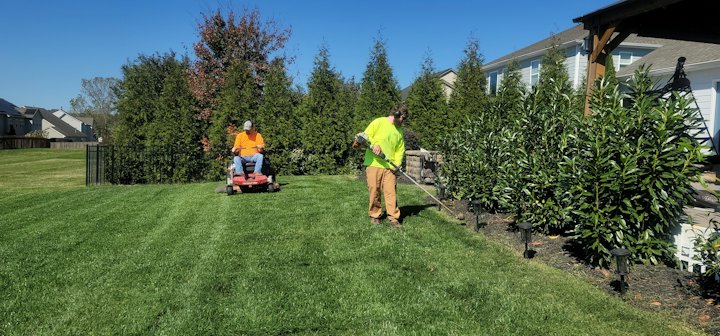 Landscaper
C-10 Landscape Contracting
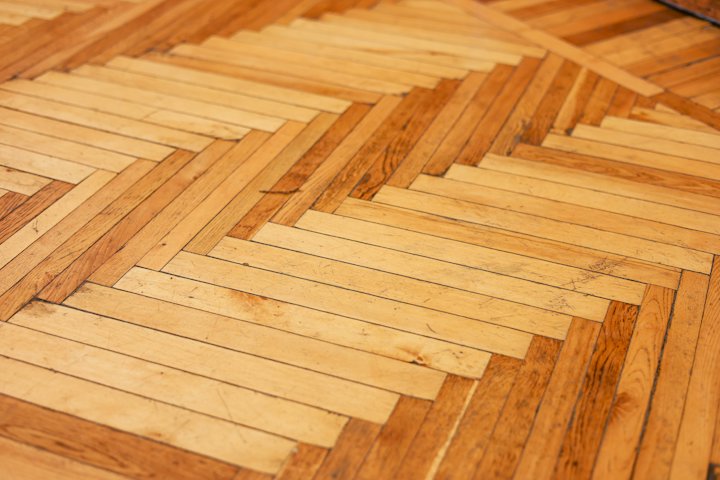 Flooring contractor
C-16 Finishing Floors (C-16a Covering Floors)
 Concrete contractor
C-5 Concrete Contracting
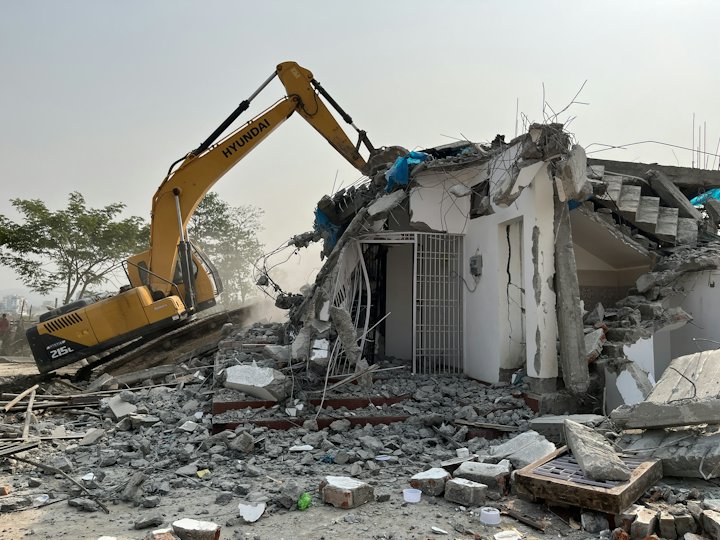 Demolition contractor
A-13 Wrecking Buildings
 Pool and spa contractor
A-10 Commercial and Residential Pools (A-10a to A-10f)
 Solar installer
C-2g Photovoltaics (electric); C-37 Solar Contracting (solar heating)
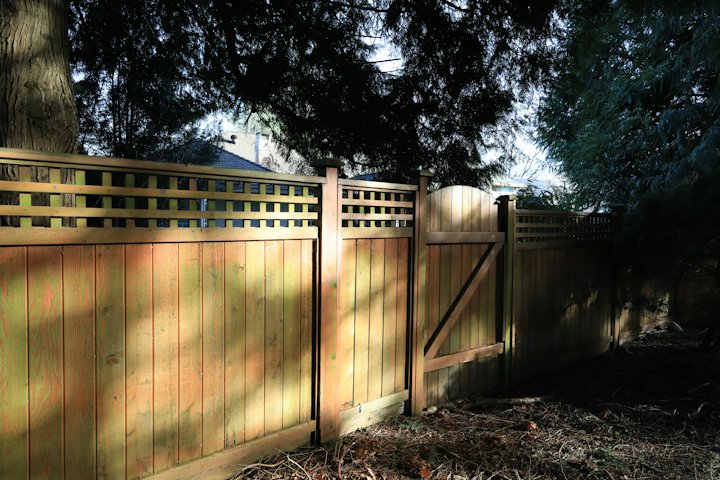 Fence contractor
C-25 Fencing and Equipping Playgrounds
 Pest control
 business license, plus an individual license as principal, operator or agent
 Home inspector
Certified Residential Inspector (also Certified General Inspector and Certified Master Inspector)
General contractor licenses in other states
 Alabama
General Contractor license (prime contractor or subcontractor), with major and specialty classifications
 Alaska
Certificate of registration as a general contractor
 Arizona
B-1 General Commercial Contractor, KB-1 Dual Building Contractor, or B General Residential Contractor
 Arkansas
Commercial contractor license (restricted or unrestricted), Arkansas Contractors Licensing Board
 California
B General Building Contractor
 Connecticut
Home Improvement Contractor Registration (residential work); Major Contractor Registration (buildings over the threshold limits)
 Delaware
Contractor Business License (resident or non-resident), Division of Revenue
 District of Columbia
Basic Business License with General Contractor/Construction Manager endorsement (Class A, B, C, G or H)
 Florida
Certified General Contractor (CG) or Registered General Contractor (RG)
 Georgia
Commercial General Contractor license
 Hawaii
B General Building Contractor
 Idaho
Idaho contractor registration
 Illinois
No state license for this work
 Indiana
No state license. Cities or counties may license it
 Iowa
Construction contractor registration
 Kansas
No state license. Cities or counties may license it
 Kentucky
No state license. Cities or counties may license it
 Louisiana
Commercial license, Building Construction classification
 Maryland
Home Improvement Contractor License (Maryland Home Improvement Commission)
 Massachusetts
Construction Supervisor License (Unrestricted)
 Michigan
No state license for this work
 Minnesota
Construction contractor registration
 Mississippi
Commercial certificate of responsibility, Building Construction major classification
 Missouri
No state license. Cities or counties may license it
 Montana
 Construction Contractor License
 Nebraska
Contractor registration (Nebraska Department of Labor)
 New Jersey
Home Improvement Contractor Business Registration
 New Mexico
GB-98 General Building
 New York
No state license. Cities or counties may license it
 North Carolina
General Contractor license, Building classification (limited, intermediate or unlimited)
 North Dakota
Contractor License (Class A, B, C or D)
 Ohio
No state license. Cities or counties may license it
 Oklahoma
No state license. Cities or counties may license it
 Oregon
CCB contractor license with a general contractor endorsement (Residential General, or Commercial General Level 1 or Level 2)
 Pennsylvania
Home Improvement Contractor Registration (HICPA)
 Rhode Island
Contractor Registration
 South Carolina
General Contractor license (Contractor's Licensing Board)
 South Dakota
Contractor's Excise Tax License (Department of Revenue)
 Tennessee
Contractor license (BC Building Construction, BC-B Commercial, BC-C Industrial, or other classification)
 Texas
No state license for this work
 Utah
B100 General Building Contractor
 Vermont
Residential Contractor Registration (individual or business)
 Virginia
Class A, B or C contractor license with the Commercial Building (CBC) or Residential Building (RBC) classification
 Washington
General contractor registration
 West Virginia
General Building Contractor
 Wisconsin
Dwelling Contractor certification with a Dwelling Contractor Qualifier (one- and two-family dwellings)