HVAC contractor · Oregon
Oregon HVAC contractor license requirements
What Oregon requires before you take paid heating, ventilation and air conditioning work: the license, job size limit, exams, fees, bond and insurance. Checked November 6, 2026 from 12 official sources.
Do I need a license to work as an HVAC contractor in Oregon?
Yes. You need a state license for larger jobs: CCB contractor license; electrical HVAC work also needs a BCD Restricted Energy Contractor (CRE) or Limited Maintenance Specialty Contractor HVAC/R (LHR) license.
- Needed from
- $1,000
- Bond
- $20,000
- CCB initial license application
- $400
- Exams
- 1
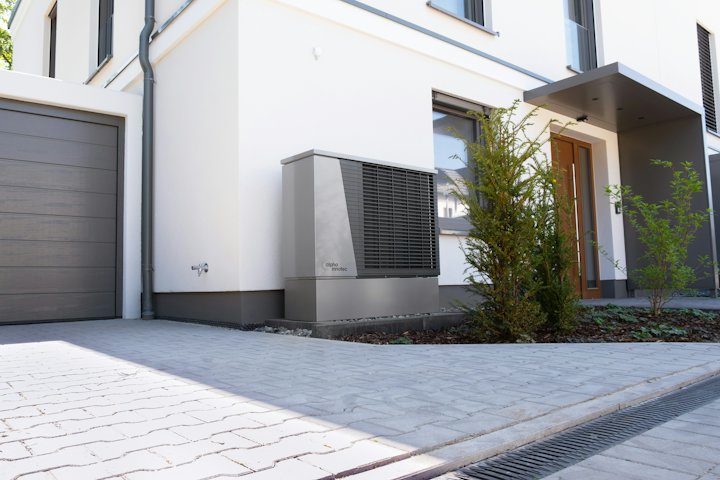
A CCB license is needed for paid construction work on real property.34
More
Unlicensed work is allowed only when the total price of all of a person's contracts on one structure or project is under $1,000 and the work is casual, minor or inconsequential. CCB rules define that as work that needs no permit, does not affect the health or safety of the owner or occupant, and is not done as a subcontractor to a licensee. Lead-based paint work never qualifies. The exemption does not apply to anyone who advertises or uses a sign or card that suggests they are a contractor.
How to get licensed
- 1
Have the Responsible Managing Individual take the 16-hour pre-license training from an approved provider and pass the Oregon exam with PSI.5
- 2
- 3
Register the business name or entity with the Oregon Secretary of State.5
- 4
Get a CCB surety bond and a general liability certificate in the amounts for that endorsement, plus workers' compensation if there are employees.5
- 5
Apply online with the bond, insurance certificate, exam results, signed certification form and the $400 fee. CCB says processing can take six to eight weeks.5
- 6
Check the license on the CCB license search once it is issued.2
What Oregon requires
Experience
Oregon does not require years of trade experience for a CCB license.5
More
The business needs a Responsible Managing Individual (RMI), an owner or employee who manages or supervises its construction work. The RMI qualifies by finishing 16 hours of pre-license training and passing the Oregon exam, by passing the NASCLA commercial exam plus the Oregon exam, or by having been continuously tied to an Oregon license since before July 1, 2000 with no lapse over 24 months. Applicants must be at least 18.
Exams 1
- Oregon contractor exam
After the 16-hour pre-license training, the RMI takes the Oregon exam through PSI.5
More
It is open book, based on the Oregon edition of the NASCLA Contractors Guide to Business, Law and Project Management. It has 80 multiple-choice questions, a passing score of 70 percent (56 correct), a three-hour limit and a $60 fee. The license application must be filed within 24 months of passing.
Bond $20,000
The bond depends on the endorsement. Residential: general $25,000, specialty $20,000, limited $15,000.35
More
Commercial: general Level 1 $80,000, specialty Level 1 $55,000, general Level 2 $25,000, specialty Level 2 $25,000. A license with both residential and commercial endorsements needs a bond for each. The amount shown is the residential specialty bond, the endorsement for work involving two or fewer unrelated trades.
You pay a yearly premium, not the full amount: about $200–$600 a year with good credit (about 675-700+). Estimate for your credit
Liability insurance
General liability insurance is required, with products and completed operations coverage, and the CCB must be the certificate holder.35
More
Minimums: residential general $500,000, residential specialty $300,000, residential limited $100,000 per occurrence; commercial general Level 1 $2,000,000 aggregate, commercial general Level 2 $1,000,000 aggregate, commercial specialty Level 1 $1,000,000 aggregate, commercial specialty Level 2 $500,000 per occurrence.
Workers' compensation
Workers' compensation insurance is required if the business has employees.35
More
Businesses with no employees, and family-owned partnerships, corporations or LLCs where all owners are family members, are exempt. Commercial contractors must carry workers' compensation even if they are in the exempt class.
Renewal
A CCB license lasts two years and renews for $400. Residential contractors must finish 8 hours of continuing education each two-year period (3 hours of CCB laws, regulations and business practices plus 5 other approved hours), or 16 hours (3 plus 13) if licensed less than six years.357
More
Commercial Level 2 contractors need 32 hours by key employees per two years, and Level 1 contractors with five or more key employees need 80 hours. A license lapsed more than two years needs a new application and the pre-license training and test again.
Fees
Good to know
CCB lists heating and air conditioning work as work that needs a CCB license.5
BCD's Limited Maintenance Specialty Contractor HVAC/R (LHR) license covers maintaining, servicing, repairing or replacing commercial and industrial heating, power, refrigeration or air conditioning products.910
More
Its qualifying person needs two years (4,000 hours) of installation experience plus approved specialized training.
A residential specialty contractor may do work involving two or fewer unrelated trades on residential or small commercial structures.8
More
If three or more unrelated trades are involved, the whole contract cannot exceed $2,500.
HVAC contractor rules in Oregon cities
Some places make HVAC contractors get a local license on top of Oregon's. Find yours below.
No match. Your city may not be on the site yet. Check with its building department.
Hiring an HVAC contractor in Oregon?
What to ask for
A current CCB contractor license; electrical HVAC work also needs a BCD Restricted Energy Contractor (CRE) or Limited Maintenance Specialty Contractor HVAC/R (LHR) license number, then look it up yourself. Oregon also requires a bond for this license.
Common questions
Do I need a license to work as an HVAC contractor in Oregon?
Yes. Oregon requires CCB contractor license; electrical HVAC work also needs a BCD Restricted Energy Contractor (CRE) or Limited Maintenance Specialty Contractor HVAC/R (LHR) license above a job size limit. A CCB license is needed for paid construction work on real property. Unlicensed work is allowed only when the total price of all of a person's contracts on one structure or project is under $1,000 and the work is casual, minor or inconsequential. CCB rules define that as work that needs no permit, does not affect the health or safety of the owner or occupant, and is not done as a subcontractor to a licensee. Lead-based paint work never qualifies. The exemption does not apply to anyone who advertises or uses a sign or card that suggests they are a contractor.
How much does CCB contractor license; electrical HVAC work also needs a BCD Restricted Energy Contractor (CRE) or Limited Maintenance Specialty Contractor HVAC/R (LHR) license cost in Oregon?
CCB initial license application (two-year license): $400. CCB license renewal (every two years): $400. Oregon contractor exam (paid to PSI): $60. Endorsement change: $20.
Is a bond required?
The bond depends on the endorsement. Residential: general $25,000, specialty $20,000, limited $15,000. Commercial: general Level 1 $80,000, specialty Level 1 $55,000, general Level 2 $25,000, specialty Level 2 $25,000. A license with both residential and commercial endorsements needs a bond for each. The amount shown is the residential specialty bond, the endorsement for work involving two or fewer unrelated trades.
What exams do I need to pass?
Oregon contractor exam.
How often do I renew?
A CCB license lasts two years and renews for $400. Residential contractors must finish 8 hours of continuing education each two-year period (3 hours of CCB laws, regulations and business practices plus 5 other approved hours), or 16 hours (3 plus 13) if licensed less than six years. Commercial Level 2 contractors need 32 hours by key employees per two years, and Level 1 contractors with five or more key employees need 80 hours. A license lapsed more than two years needs a new application and the pre-license training and test again.
Sources
12 official pages, checked November 6, 2026
- Oregon Construction Contractors Board : Welcome Page : State of Oregon · Oregon Construction Contractors Board · checked November 6, 2026
- CCB License Search · Oregon Construction Contractors Board · checked November 6, 2026
- ORS Chapter 701 - Construction Contractors and Contracts · Oregon State Legislature · checked November 6, 2026
- OAR 812, Division 2 - Definitions (Construction Contractors Board) · Oregon Secretary of State · checked November 6, 2026
- Oregon Construction Contractors Board : CCB License : State of Oregon · Oregon Construction Contractors Board · checked November 6, 2026
- Oregon Construction Contractors Board : Fee Increase : State of Oregon · Oregon Construction Contractors Board · checked November 6, 2026
- Oregon Construction Contractors Board : Continuing Education : State of Oregon · Oregon Construction Contractors Board · checked November 6, 2026
- OAR 812, Division 3 - Licensing (Construction Contractors Board) · Oregon Secretary of State · checked November 6, 2026
- Building Codes Division : Contractor and business licenses : Licensing : State of Oregon · Oregon Building Codes Division · checked November 6, 2026
- Instructions for Completing the Single or Combination Contractor/Business License (Form 440-2888) · Oregon Building Codes Division · checked November 6, 2026
- ORS Chapter 479 - Protection of Buildings; Electrical Safety · Oregon State Legislature · checked November 6, 2026
- Building Codes Division : Individual licenses : Licensing : State of Oregon · Oregon Building Codes Division · checked November 6, 2026
Rules change. Confirm with the agency before you bid or start work. How we research
Other trades in Oregon
 General contractor
CCB contractor license with a general contractor endorsement (Residential General, or Commercial General Level 1 or Level 2)
 Residential builder
CCB contractor license with a Residential General Contractor endorsement
 Electrician
Electrical Contractor (C) business license, with General Supervising (S), General Journeyman (J) or Limited Residential (LR) electrician licenses for individuals
 Plumber
Plumbing Business (PB) license, with a Journeyman Plumber (JP) license for individuals
 Roofer
CCB contractor license (no separate roofing license)
 Painter
CCB contractor license (no separate painting license)
 Handyman
Covered by the state contractor license above a threshold
 Landscaper
Landscape Contracting Business license, with a Landscape Construction Professional (LCP) individual license
 Flooring contractor
CCB contractor license (no separate flooring license)
 Concrete contractor
CCB contractor license (no separate concrete license)
 Demolition contractor
CCB contractor license (no separate demolition license)
 Solar installer
Limited Renewable Energy Contractor (CLR) or Electrical Contractor (C) license, with Limited Renewable Energy Technician (LRT) or journeyman electricians
 Fence contractor
CCB contractor license or LCB landscape contracting business license
 Tree service
CCB contractor license or LCB landscape contracting business license
 Pest control
Commercial Pesticide Operator license (business), with Commercial Pesticide Applicator licenses for individuals
 Home inspector
Oregon Certified Home Inspector (OCHI) certification, tied to a CCB license (Home Inspector Services Contractor, Residential General or Residential Specialty)
HVAC contractor licenses in other states
 Alabama
Certified Heating and Air Conditioning Contractor or Refrigeration Contractor
 Arizona
R-39, C-39 or CR-39 Air Conditioning and Refrigeration
 Arkansas
HVACR Class A, B, D or E license (HVACR Licensing Board)
 California
C-20 Warm-Air Heating, Ventilating and Air-Conditioning Contractor
 Connecticut
S-1 Unlimited Heating, Piping and Cooling Contractor (S-2 Journeyperson); limited types such as D-1/D-2 Warm Air, Air Conditioning and Refrigeration
 Delaware
Master HVACR or Master HVACR Restricted License (Board of Plumbing, Heating, Ventilation, Air Conditioning and Refrigeration Examiners)
 District of Columbia
Master Refrigeration and Air Conditioning Mechanic and Refrigeration and Air Conditioning Contractor (Board of Industrial Trades)
 Florida
Certified Class A or Class B Air-Conditioning Contractor (CA) or Certified Mechanical Contractor (CM); registered versions RA and RM
 Georgia
Conditioned Air Contractor Class I or Conditioned Air Contractor Class II
 Hawaii
C-52 Ventilating and Air Conditioning Contractor
 Idaho
HVAC contractor and journeyman certificates of competency
 Illinois
No state license. Cities or counties may license it
 Indiana
No state license. Cities or counties may license it
 Iowa
Mechanical contractor license, with Master and Journeyperson HVAC-refrigeration, hydronic, mechanical or sheet metal licenses for individuals
 Kansas
No state license. Cities or counties may license it
 Kentucky
Master HVAC Contractor license (Journeyman HVAC Mechanic license for workers)
 Louisiana
Mechanical classification, or the Heat, Air Conditioning, Ventilation, Duct Work, and Refrigeration subclassification (LSLBC)
 Maine
Oil Burner, Solid Fuel, or Propane and Natural Gas Technician (Maine Fuel Board)
 Maryland
Master HVACR Contractor License (State Board of HVACR Contractors)
 Massachusetts
Sheet Metal Worker license (journeyperson or master) for ductwork; Refrigeration Technician license for refrigeration over 10 tons
 Michigan
Mechanical Contractor License (HVAC equipment and other work classifications)
 Minnesota
Mechanical contractor bond filing (no state HVAC license)
 Mississippi
Heat, Ventilation, A/C (HVAC) specialty or Mechanical major classification (commercial); Residential HVAC or Residential Mechanical license
 Nebraska
No state license. Cities or counties may license it
 Nevada
C-21 Refrigeration and Air-Conditioning (C-21b Air-Conditioning); C-1f for heating and evaporative cooling
 New Hampshire
Fuel Gas Installation Technician or Fuel Gas Service Technician license (gas equipment)
 New Jersey
Master HVACR Contractor License
 New Mexico
MM-3 Heating, Ventilation and Air Conditioning (or MM-98 Mechanical)
 North Carolina
Heating Contractor license (Heating Group 1, 2 or 3; Class I or Class II)
 Ohio
HVAC Contractor (OCILB)
 Oklahoma
Mechanical Contractor License (HVAC/R Unlimited or Limited)
 Pennsylvania
Home Improvement Contractor Registration (HICPA)
 Rhode Island
Refrigeration/Air Conditioning Master and Journeyperson; Pipefitter Master and Journeyperson; Sheet Metal Contractor and Journeyperson
 South Carolina
Residential HVAC Installer and Repairer license (Residential Builders Commission); Mechanical Contractor license, Air Conditioning, Heating or Packaged Equipment classification (Contractor's Licensing Board)
 Tennessee
Contractor license with CMC-C HVAC, Refrigeration and Gas Piping classification
 Texas
Air Conditioning and Refrigeration Contractor License (Class A or Class B)
 Utah
H100 HVAC Contractor
 Virginia
Class A, B or C contractor license with the HVAC (HVA) classification, qualified by a Master HVAC tradesman license
 Washington
Specialty contractor registration (Heating, ventilation, air-conditioning and refrigeration (HVAC/R), code SM)
 West Virginia
HVAC Technician, HVAC Residential Technician or Technician-in-Training license (Division of Labor); Heating, Ventilating and Cooling Contractor license (Contractor Licensing Board)
 Wisconsin
HVAC Contractor registration (business); HVAC Qualifier certification (optional, individual)