Flooring contractor · Virginia
Virginia flooring contractor license requirements
What Virginia requires before you take paid flooring work: the license, job size limit, exams, fees, bond and insurance. Checked November 6, 2026 from 23 official sources.
Do I need a license to work as a flooring contractor in Virginia?
Yes. You need a state license: Class A, B or C contractor license with the Flooring and Floor Covering (FLR) specialty.
Issued by Virginia Board for Contractors (Department of Professional and Occupational Regulation)12
- Needed from
- See limit below
- Bond
- None listed
- Recovery Fund assessment with each initial license application
- $25
- Exams
- 3
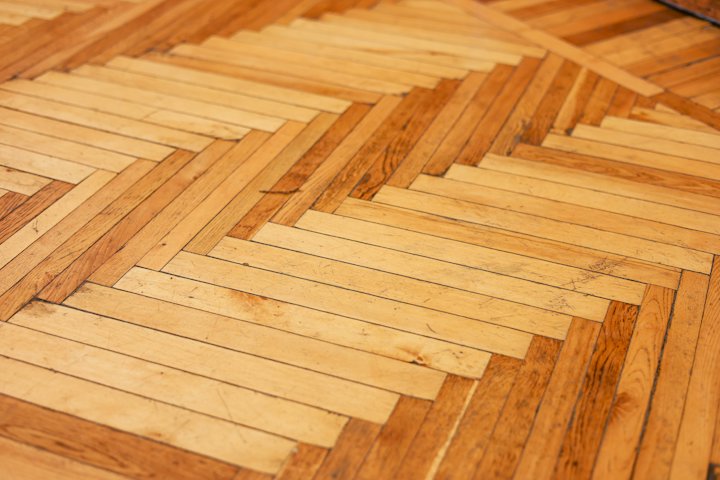
A Board for Contractors license is needed when a single job is worth more than $1,000.34
More
A Class C license covers single jobs over $1,000 and under $30,000, with less than $250,000 of work in any 12 months. A Class B license covers single jobs of $30,000 up to $150,000, or $250,000 up to $1 million of work in 12 months. A Class A license is needed for single jobs of $150,000 or more, or $1 million or more of work in 12 months. Value means fair market value, and the contract price counts as proof of value.
How to get licensed
- 1
Form the business and register it, and any assumed or fictitious name, with the Virginia State Corporation Commission or local court as required. Licenses are issued to businesses, not to individuals.4
- 2
- 3
- 4
- 5
- 6
Send the application and fee to DPOR. Fees are not refunded. DPOR says most applications take about 30 days.4
- 7
What Virginia requires
Experience
Each classification or specialty on the license needs a qualified individual.4567
More
The qualified individual must be at least 18, be a full-time employee of the firm (at least 30 hours a week, not a 1099 worker) or a member of its responsible management, and have at least 1 year of experience in that classification or specialty for Class C, 3 years for Class B, or 5 years for Class A.
Exams 3
- Business exams (designated employee, Class A and B)
Class A and Class B firms must name a designated employee, who is a full-time employee or a member of responsible management, at least 18.346
More
For Class B the designated employee passes the General and Virginia portions of the business exam; for Class A, the General, Virginia and Advanced portions. The exams are taken through PSI. Class C firms do not have a designated employee.
- Technical exam (FLR)
The qualified individual for Flooring and Floor Covering must pass a Board-approved technical exam for that specialty, in addition to the experience requirement.48910
More
The Board must first approve the person to sit for the exam, based on an Experience Verification Form. Exam approvals are valid for one year with no extensions.
- Exam fees
Exam fees are paid to the testing vendor under its contract with the Board.11
More
The regulations cap the contractor exam at $200 per element. The Board pages checked do not state the current PSI fee for contractor exams.
Bond None
No contractor bond is required for a license. Class A firms must show a net worth of $45,000 and Class B firms $15,000, with a financial statement and supporting papers, a CPA-reviewed statement, or a CPA audit.467
More
Instead of showing net worth, a Class A or B firm may file a $50,000 surety bond on the Board's bond form. Class C firms have no net worth requirement.
Liability insurance
Not published by the agency. Customers and general contractors often ask for proof anyway.
Workers' compensation
Virginia's workers' compensation law does not cover the employees of a business that regularly has fewer than three employees in the same business in Virginia, unless the business and employees choose to be covered.15
More
The Board for Contractors pages checked do not state a separate insurance requirement for a contractor license.
Renewal
A contractor license expires two years after the last day of the month it was issued.41617
More
DPOR mails a renewal notice, but not getting it does not excuse a late renewal. The renewal and fee must arrive within 30 days after expiration; the license is not valid during that 30-day grace period. After 30 days the firm must apply for reinstatement. The firm must still meet all the requirements of its license class to renew.
Fees
Good to know
The Flooring and Floor Covering (FLR) specialty covers installing, repairing and removing wood and composite flooring, carpet tack strips, vinyl, linoleum, ceramic, marble, stone and other tile, plus subflooring and leveling products.20
More
It does not include floor joists or other structural parts of the floor.
The Residential Building (RBC) and Commercial Building (CBC) classifications and the Home Improvement (HIC) and Commercial Improvement (CIC) specialties also cover this work.1020
More
To qualify for HIC or CIC, the qualified individual needs experience in at least three of the 'breakout' specialties: DRY, FIN, FLR, GLZ, INS, BRK, PTC, ROC, TMC and FRM.
Tile, marble, ceramic and terrazzo work is also its own specialty (TMC), and wood flooring is also part of Finish Carpentry (FIN).20
A firm that works as a subcontractor for a licensed Residential Building, Commercial Building or Home Improvement contractor does not need its own license for jobs of $25,000 or less, except for work that needs an individual trade license or certification.21
The Contractor Transaction Recovery Fund can pay homeowners who win a court judgment against a licensed contractor for improper or dishonest conduct on residential work.2223
More
The limit is $30,000 per claimant for one transaction and $100,000 for all claims against one contractor in a two-year period.
A licensed contractor may not bid on a job whose main scope is outside its license.10
More
It may take on work outside its license only if that work is incidental and is subcontracted to properly licensed contractors.
Flooring contractor rules in Virginia cities
Some places make flooring contractors get a local license on top of Virginia's. Find yours below.
No match. Your city may not be on the site yet. Check with its building department.
Hiring a flooring contractor in Virginia?
What to ask for
A current Class A, B or C contractor license with the Flooring and Floor Covering (FLR) specialty number, then look it up yourself.
Common questions
Do I need a license to work as a flooring contractor in Virginia?
Yes. Virginia requires Class A, B or C contractor license with the Flooring and Floor Covering (FLR) specialty. A Board for Contractors license is needed when a single job is worth more than $1,000. A Class C license covers single jobs over $1,000 and under $30,000, with less than $250,000 of work in any 12 months. A Class B license covers single jobs of $30,000 up to $150,000, or $250,000 up to $1 million of work in 12 months. A Class A license is needed for single jobs of $150,000 or more, or $1 million or more of work in 12 months. Value means fair market value, and the contract price counts as proof of value.
How much does Class A, B or C contractor license with the Flooring and Floor Covering (FLR) specialty cost in Virginia?
Initial license fee, Class C: $235. Initial license fee, Class B: $380. Initial license fee, Class A: $400. Recovery Fund assessment with each initial license application: $25. Total due on the current application form, Class C (includes Recovery Fund and technology fee): $274.5. Total due on the current application form, Class B (includes Recovery Fund and technology fee): $419.5. Total due on the current application form, Class A (includes Recovery Fund and technology fee): $439.5. Renewal every 2 years, Class C: $220. Renewal every 2 years, Class B: $260. Renewal every 2 years, Class A: $270. Recovery Fund assessment with each renewal: $30. Add a classification or specialty to an existing license: $125. Change of designated employee or qualified individual: $125.
Is a bond required?
No contractor bond is required for a license. Class A firms must show a net worth of $45,000 and Class B firms $15,000, with a financial statement and supporting papers, a CPA-reviewed statement, or a CPA audit. Instead of showing net worth, a Class A or B firm may file a $50,000 surety bond on the Board's bond form. Class C firms have no net worth requirement.
What exams do I need to pass?
Business exams (designated employee, Class A and B). Technical exam (FLR). Exam fees.
How often do I renew?
A contractor license expires two years after the last day of the month it was issued. DPOR mails a renewal notice, but not getting it does not excuse a late renewal. The renewal and fee must arrive within 30 days after expiration; the license is not valid during that 30-day grace period. After 30 days the firm must apply for reinstatement. The firm must still meet all the requirements of its license class to renew.
Sources
23 official pages, checked November 6, 2026
- Board for Contractors | Virginia Department of Professional and Occupational Regulation · Virginia Department of Professional and Occupational Regulation · checked November 6, 2026
- License Lookup | Virginia Department of Professional and Occupational Regulation · Virginia Department of Professional and Occupational Regulation · checked November 6, 2026
- § 54.1-1100. Definitions · Virginia General Assembly (Virginia Law) · checked November 6, 2026
- Board for Contractors Contractor Licensing Information and Application Instructions (A501-27LIC-v18, 08/01/2026) · Virginia Department of Professional and Occupational Regulation · checked November 6, 2026
- 18VAC50-22-40. Requirements for a Class C license · Virginia General Assembly (Virginia Law) · checked November 6, 2026
- 18VAC50-22-50. Requirements for a Class B license · Virginia General Assembly (Virginia Law) · checked November 6, 2026
- 18VAC50-22-60. Requirements for a Class A license · Virginia General Assembly (Virginia Law) · checked November 6, 2026
- Board for Contractors Requirements for Qualified Individuals (A501-27EXINFO-v10, 09/01/2025) · Virginia Department of Professional and Occupational Regulation · checked November 6, 2026
- 18VAC50-22-61. Qualifications for classifications and specialties · Virginia General Assembly (Virginia Law) · checked November 6, 2026
- Board for Contractors Interpretations and Policies (guidance document, revisions effective 12/9/2025) · Virginia Board for Contractors, via Virginia Regulatory Town Hall · checked November 6, 2026
- 18VAC50-22-80. Examination fees · Virginia General Assembly (Virginia Law) · checked November 6, 2026
- 18VAC50-22-100. Fees · Virginia General Assembly (Virginia Law) · checked November 6, 2026
- § 54.1-1119. Assessments by Director; assignment to Fund; minimum balance; notice; penalties; costs of administration · Virginia General Assembly (Virginia Law) · checked November 6, 2026
- 18VAC50-22-140. Renewal fees · Virginia General Assembly (Virginia Law) · checked November 6, 2026
- § 65.2-101. Definitions · Virginia General Assembly (Virginia Law) · checked November 6, 2026
- 18VAC50-22-110. Renewal required · Virginia General Assembly (Virginia Law) · checked November 6, 2026
- 18VAC50-22-130. Qualifications for renewal · Virginia General Assembly (Virginia Law) · checked November 6, 2026
- 18VAC50-22-300. Prelicense education courses · Virginia General Assembly (Virginia Law) · checked November 6, 2026
- § 54.1-1111. Prerequisites to obtaining business license; building, etc., permit · Virginia General Assembly (Virginia Law) · checked November 6, 2026
- 18VAC50-22-30. Definitions of specialty services · Virginia General Assembly (Virginia Law) · checked November 6, 2026
- § 54.1-1101. Exemptions; failure to obtain certificate of occupancy; penalties · Virginia General Assembly (Virginia Law) · checked November 6, 2026
- § 54.1-1123. Limitations upon recovery from Fund; certain actions not a bar to recovery · Virginia General Assembly (Virginia Law) · checked November 6, 2026
- Contractor Transaction Recovery Fund | Virginia Department of Professional and Occupational Regulation · Virginia Department of Professional and Occupational Regulation · checked November 6, 2026
Rules change. Confirm with the agency before you bid or start work. How we research
Other trades in Virginia
 General contractor
Class A, B or C contractor license with the Commercial Building (CBC) or Residential Building (RBC) classification
 Residential builder
Class A, B or C contractor license with the Residential Building (RBC) classification
 Electrician
Class A, B or C contractor license with the Electrical (ELE) classification, qualified by a Master Electrician tradesman license
 Plumber
Class A, B or C contractor license with the Plumbing (PLB) classification, qualified by a Master Plumber tradesman license
 HVAC contractor
Class A, B or C contractor license with the HVAC (HVA) classification, qualified by a Master HVAC tradesman license
 Roofer
Class A, B or C contractor license with the Roofing (ROC) specialty
 Painter
Class A, B or C contractor license with the Painting and Wallcovering (PTC) specialty
 Handyman
Covered by the state contractor license above a threshold
 Landscaper
Class A, B or C contractor license with the Landscape Service (LSC) specialty, or the Landscape Irrigation (ISC) specialty for irrigation
 Concrete contractor
Class A, B or C contractor license with the Concrete (CEM) specialty
 Demolition contractor
Class A, B or C contractor license with the Commercial Building (CBC), Residential Building (RBC) or Highway/Heavy (H/H) classification
 Pool and spa contractor
Class A, B or C contractor license with the Swimming Pool Construction (POL) specialty
 Solar installer
Class A, B or C contractor license with the Alternative Energy System (AES) specialty
 Fence contractor
Covered by the state contractor license above a threshold
 Tree service
No state license for this work
 Pest control
Commercial Pesticide Applicator certification (Category 7A-7E) and Pesticide Business License
 Home inspector
Home Inspector license (New Residential Structure (NRS) specialty for new homes)
Flooring contractor licenses in other states
 Alabama
Home builders license with limitation (residential); General Contractor specialty Carpet and Resilient Tile or Hard Tile and Stone (commercial)
 Arizona
R-8, C-8 or CR-8 Floor Covering
 Arkansas
Home Improvement license with the Floors, Floor Covering specialty (residential, over $2,000); commercial license with the Floors, Floor Covering specialty (commercial, $50,000 or more)
 California
C-15 Flooring and Floor Covering Contractor
 Connecticut
Home Improvement Contractor Registration
 Delaware
Contractor Business License (resident or non-resident), Division of Revenue
 District of Columbia
Covered by the state contractor license above a threshold
 Florida
No state license for this work
 Hawaii
C-21 Flooring Contractor
 Idaho
Idaho contractor registration
 Iowa
Construction contractor registration
 Louisiana
Flooring and Decking subclassification (commercial); home improvement registration for residential remodels
 Maryland
Covered by the state contractor license above a threshold
 Massachusetts
Covered by the state contractor license above a threshold
 Minnesota
Construction contractor registration
 Mississippi
Floor Covering or Tile and Marble specialty classification (commercial); Residential Remodeler for home improvements over $10,000
 Montana
 Construction Contractor License
 Nebraska
Contractor registration (Nebraska Department of Labor)
 Nevada
C-16 Finishing Floors (C-16a Covering Floors)
 New Jersey
Home Improvement Contractor Business Registration
 New Mexico
No state license for this work
 New York
No state license. Cities or counties may license it
 North Carolina
General Contractor license, Specialty classification S(Interior Construction)
 North Dakota
Covered by the state contractor license above a threshold
 Ohio
No state license. Cities or counties may license it
 Oregon
CCB contractor license (no separate flooring license)
 Pennsylvania
Home Improvement Contractor Registration (HICPA)
 Rhode Island
Contractor Registration
 South Carolina
Residential Specialty Contractor registration, Floor Covering Installers classification (Residential Builders Commission); General Contractor license, Nonstructural Renovation subclassification (Contractor's Licensing Board)
 Tennessee
Contractor license with BC-4 Floor Covering classification
 Utah
S220 Carpentry and Flooring Contractor
 Vermont
Residential Contractor Registration (individual or business)
 Washington
Specialty contractor registration (Floor covering and counter tops, code SK)
 West Virginia
 contractor license (Residential, General Building, Remodeling and Repair, or Specialty classification)