Solar installer · West Virginia
West Virginia solar installer license requirements
What West Virginia requires before you take paid solar installation: the license, job size limit, exams, fees, bond and insurance. Checked November 6, 2026 from 12 official sources.
Do I need a license to work as a solar installer in West Virginia?
Yes. You need a state license: Electrical Contractor license (Contractor Licensing Board) and a State Fire Marshal electrician license.
Issued by Office of the State Fire Marshal, Regulatory and Licensing Division3
- Needed from
- See limit below
- Bond
- None listed
- Electrician license renewal, per year
- $50
- Exams
- 2
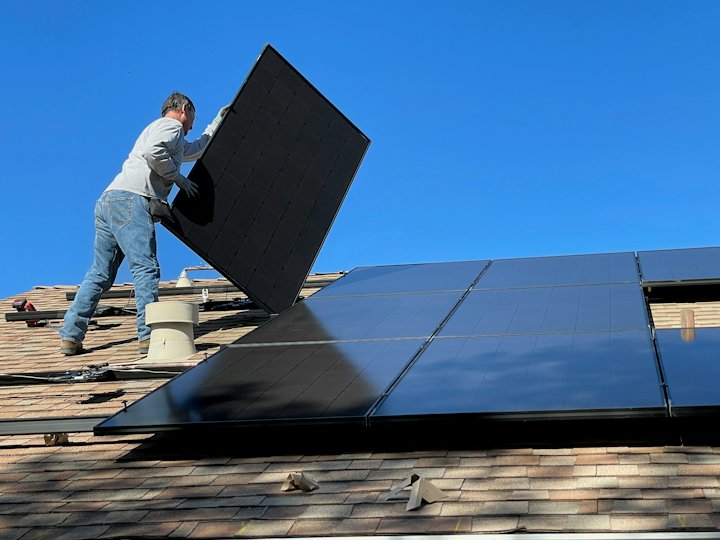
Installing wiring and equipment that carries or uses electricity is electrical work, which needs a State Fire Marshal electrician license at any job size.45
More
The Act defines an electrical contractor as one who installs or repairs electrical equipment for the generation, transmission or use of electricity, and that contractor license is needed when the whole job costs $5,000 or more (residential) or $25,000 or more (commercial).
How to get licensed
What West Virginia requires
Experience
Journeyman: at least 1 year as an electrician's helper under a master or journeyman, or a completed registered electrical apprenticeship, or an approved electrical vocational program of at least 1,080 hours.46
More
Master: 2 years of experience as a journeyman electrician. Specialty: at least 1 year in the specialty area, which may come from an education program. Applicants must be at least 18.
Exams 2
- Electrician exam (Master, Journeyman or Specialty)
A written exam based on the National Electrical Code for the license level applied for.67
More
The passing grade is 70%. The State Fire Marshal gives exams at least four times a year in Charleston, and the 2026 schedule also lists Beckley, Clarksburg, Martinsburg and Wellsburg. The exam request must be filed at least 10 working days before the exam date.
- Contractor exams (Electrical Contractor)
For the contractor license, the qualifier must pass the electrical contractor exam and the West Virginia Business and Law exam with at least 70%, through the Contractor Licensing Board's approved testing agent.8
Bond
The contractor license itself has no license bond in the Act or the board rule.101112
More
Separately, a construction employer must post a wage bond with the Division of Labor before starting construction work, unless it has done construction work in West Virginia for at least one year or qualifies for another exemption (for example, five years in business in another state, or at least $100,000 in assets). The bond equals four weeks of gross payroll at full capacity plus 15%. Applicants certify they comply with the wage bond law before the license is issued.
Liability insurance
Not published by the agency. Customers and general contractors often ask for proof anyway.
Workers' compensation
Before the license is issued, the applicant signs an affidavit that it has registered with and is in compliance with the workers' compensation fund and the employment security (unemployment) fund, and is in compliance with the business franchise tax law. The board checks this again at each renewal.812
Renewal
All electrician licenses expire on June 30 each year. They can be renewed for one to three years at $50 per year.68
More
A license not renewed on time can be renewed within the licensure year by paying the $50 fee plus a $50 penalty, and no electrical work may be done while it is expired. The contractor license is renewed separately each year with the Contractor Licensing Board.
Fees
Good to know
Hiring a solar installer in West Virginia?
What to ask for
A current Electrical Contractor license (Contractor Licensing Board) and a State Fire Marshal electrician license number, then look it up yourself.
Common questions
Do I need a license to work as a solar installer in West Virginia?
Yes. West Virginia requires Electrical Contractor license (Contractor Licensing Board) and a State Fire Marshal electrician license. Installing wiring and equipment that carries or uses electricity is electrical work, which needs a State Fire Marshal electrician license at any job size. The Act defines an electrical contractor as one who installs or repairs electrical equipment for the generation, transmission or use of electricity, and that contractor license is needed when the whole job costs $5,000 or more (residential) or $25,000 or more (commercial).
How much does Electrical Contractor license (Contractor Licensing Board) and a State Fire Marshal electrician license cost in West Virginia?
Electrician exam application review fee (not refundable): $25. Electrician license renewal, per year: $50. Late renewal penalty (electrician license): $50. One-time 90-day temporary master or journeyman license: $50. Contractor license annual fee, sole proprietor who only does electrical contracting and holds a state electrician license: $20. Contractor license annual fee, other electrical contractors: $90.
Is a bond required?
The contractor license itself has no license bond in the Act or the board rule. Separately, a construction employer must post a wage bond with the Division of Labor before starting construction work, unless it has done construction work in West Virginia for at least one year or qualifies for another exemption (for example, five years in business in another state, or at least $100,000 in assets). The bond equals four weeks of gross payroll at full capacity plus 15%. Applicants certify they comply with the wage bond law before the license is issued.
What exams do I need to pass?
Electrician exam (Master, Journeyman or Specialty). Contractor exams (Electrical Contractor).
How often do I renew?
All electrician licenses expire on June 30 each year. They can be renewed for one to three years at $50 per year. A license not renewed on time can be renewed within the licensure year by paying the $50 fee plus a $50 penalty, and no electrical work may be done while it is expired. The contractor license is renewed separately each year with the Contractor Licensing Board.
Sources
12 official pages, checked November 6, 2026
- Licensing | WV Division of Labor · West Virginia Division of Labor · checked November 6, 2026
- Database Search | WV Division of Labor · West Virginia Division of Labor · checked November 6, 2026
- Regulatory and Licensing Division | Office of the State Fire Marshal · Office of the State Fire Marshal · checked November 6, 2026
- West Virginia Code §29-3B-2. Necessity of license; definitions. · West Virginia Legislature · checked November 6, 2026
- West Virginia Code §30-42-3. Definitions. · West Virginia Legislature · checked November 6, 2026
- 103CSR5 Electrician Licensing Rules (legislative rule, effective May 1, 2024) · West Virginia Secretary of State · checked November 6, 2026
- 2026 Exam Dates and Locations · Office of the State Fire Marshal · checked November 6, 2026
- 28CSR2 West Virginia Contractor Licensing Act (legislative rule, effective May 4, 2026) · West Virginia Secretary of State · checked November 6, 2026
- West Virginia Code §30-42-7. Application for, issuance, and transfer of license. · West Virginia Legislature · checked November 6, 2026
- West Virginia Code §21-5-14. Employer's bond for wages and benefits. · West Virginia Legislature · checked November 6, 2026
- Wage Bonding | WV Division of Labor · West Virginia Division of Labor · checked November 6, 2026
- West Virginia Code §30-42-5. Administrative duties and powers of the board; rules. · West Virginia Legislature · checked November 6, 2026
Rules change. Confirm with the agency before you bid or start work. How we research
Other trades in West Virginia
 General contractor
General Building Contractor
 Residential builder
Residential Contractor
 Electrician
Electrical Contractor license (Contractor Licensing Board); Master, Journeyman or Specialty Electrician license (State Fire Marshal)
 Plumber
Master, Journeyman or Plumber-in-Training license (Division of Labor); Plumbing Contractor license (Contractor Licensing Board)
 HVAC contractor
HVAC Technician, HVAC Residential Technician or Technician-in-Training license (Division of Labor); Heating, Ventilating and Cooling Contractor license (Contractor Licensing Board)
 Roofer
West Virginia contractor license (Residential, General Building, Remodeling and Repair, or Specialty classification)
 Painter
No state license for this work
 Handyman
Remodeling and Repair Contractor or Residential Contractor (West Virginia contractor license)
 Landscaper
No state license for this work
 Flooring contractor
West Virginia contractor license (Residential, General Building, Remodeling and Repair, or Specialty classification)
 Concrete contractor
Concrete Contractor
 Demolition contractor
West Virginia contractor license (classification that covers the demolition work)
 Pool and spa contractor
General Engineering Contractor (public pools); West Virginia contractor license for other pool work
 Fence contractor
West Virginia contractor license (Residential, General Building, Remodeling and Repair, or Specialty classification)
 Pest control
Licensed Pesticide Application Business (LPAB) license, Commercial Applicator license and Registered Technician license
 Home inspector
Home Inspector certification
Solar installer licenses in other states
 Alabama
Home builders license without limitation (unlimited), for residential solar
 Arkansas
Home Improvement license with the Solar Systems specialty (residential, over $2,000); commercial license with the Solar Systems specialty (commercial, $50,000 or more)
 California
C-46 Solar Contractor
 Colorado
Photovoltaic Installer registration (or Electrical Contractor registration)
 Connecticut
PV-1 Limited Solar Electric Contractor (PV-2 Journeyperson); ST-1 Solar Thermal Contractor
 Florida
Certified Solar Contractor (CV) or Registered Solar Contractor (RV)
 Hawaii
C-60 Solar Power Systems Contractor
 Idaho
Limited electrical installer and limited electrical contractor (Solar Photovoltaic category)
 Illinois
Distributed Generation Installer Certification
 Louisiana
Solar Energy Equipment specialty (LSLBC)
 Maryland
Covered by the state contractor license above a threshold
 Massachusetts
Electrician license (for the electrical work), plus Construction Supervisor License and HIC registration
 Michigan
Electrical Contractor License
 Minnesota
Residential Building Contractor (BC) or Residential Remodeler (CR) license, plus an electrical contractor license for the installation
 Mississippi
Residential Solar license; Solar and Wind Construction classification (commercial)
 Nevada
C-2g Photovoltaics (electric); C-37 Solar Contracting (solar heating)
 New Jersey
Electrical Contractor License and Business Permit
 New Mexico
EE-98 or ER-1 Electrical (photovoltaic); MM-1 or MM-98 (solar thermal piping)
 New York
No state license. Cities or counties may license it
 North Carolina
Covered by the state contractor license above a threshold
 North Dakota
Covered by the state contractor license above a threshold
 Oregon
Limited Renewable Energy Contractor (CLR) or Electrical Contractor (C) license, with Limited Renewable Energy Technician (LRT) or journeyman electricians
 Pennsylvania
Home Improvement Contractor Registration (HICPA)
 Rhode Island
Renewable Energy Professional Certificate (Certificate REP), with electrical work by a licensed electrician
 South Carolina
Residential Specialty Contractor registration, Solar Panel Installers classification (Residential Builders Commission); General Contractor license, Miscellaneous Metals subclassification (Contractor's Licensing Board)
 Tennessee
Contractor license with S-Solar Panel Installation specialty classification
 Texas
Electrical Contractor (TDLR) to install; Residential Solar Retailer registration (TDLR) to sell or lease residential systems
 Utah
S202 Solar Photovoltaic Contractor
 Virginia
Class A, B or C contractor license with the Alternative Energy System (AES) specialty
 Washington
Electrical contractor license, with certified electricians